
During the cold season, people often talk about a “flu epidemic.” But what exactly does this term mean? When was the last major epidemic? How can you recognize the flu? And why is hand disinfection a crucial factor? We answer these key questions about influenza (flu) and provide facts and recommendations.
The last major flu season was in the winter of 2024/25: Laut Robert-Koch-Institut (RKI)
The regular flu season in Germany generally runs from calendar week 40 (around the beginning of October) to calendar week 20 (around the middle of May).
Depending on how it progresses, the peak of the flu season can vary, but it is often between January and March. In the 2022/2023 season, for example, the flu season peaked in calendar week 50 of 2022, according to the RKI and ended after about eleven weeks in calendar week 1 of 2023.
A flu epidemic usually ends between the end of February and the beginning of April, depending on the virus, climate, vaccination rate, and behavior of the population.

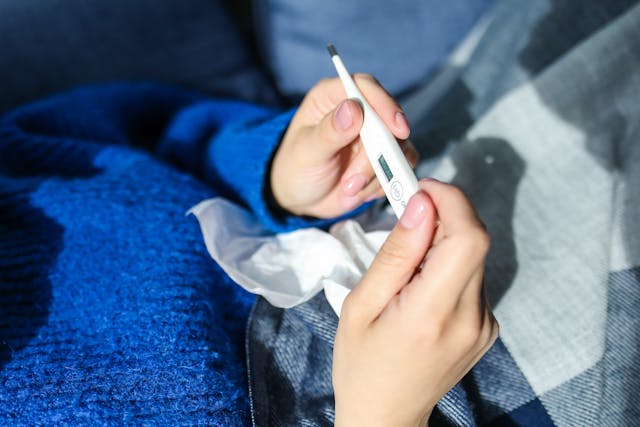
Die Symptome bei einer echten Grippe (Influenza) sind meist deutlich stärker als bei einer „normalen Erkältung“. Typische Anzeichen sind:
The incubation period (the time from infection to the first symptoms) is usually 1-2 days. In uncomplicated cases, the symptoms subside after 5-7 days. Coughing or fatigue may persist for longer.
Why hand sanitizer and sanitizer dispensers are particularly important for businesses
In addition, companies with disinfection stations send an important signal: they show that they take the health of their employees, customers, and guests seriously. This promotes trust and can help reduce sick days, which makes economic sense.
Our t touchless disinfectant dispenser are suitable for a wide range of industries:


We would be happy to advise you on which device is best suited to your company. Simply send us an email at info@steripower.de or give us a call. Tel.: 08151 555 15 16
The flu season hits Germany almost every year, usually between January and March, with symptoms that go far beyond those of a common cold. The 2024/25 season was particularly severe, with very high case numbers. Anyone experiencing symptoms such as high fever, cough, aching limbs, or severe fatigue should be cautious and avoid infecting others. For companies, hand disinfection is a simple but effective measure to limit the spread of influenza and thus protect employees, customers, and guests.